
Fanuc plans to invest $90m to expand US robot production
 25 March 2026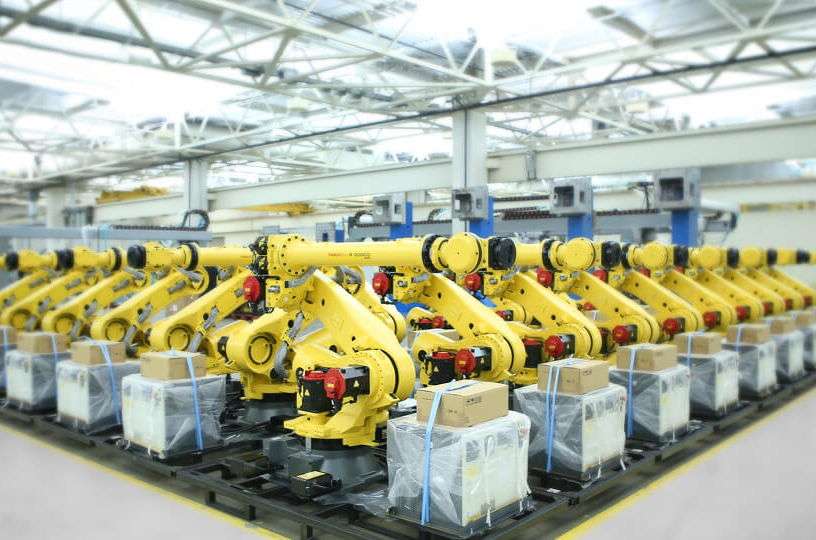
Fanuc America has announced plans to invest $90m to acquire property and build a 840,000ft2 (78,038m2) facility in Michigan in the United States to provide production-ready space that could be used to expand its US robot manufacturing capacity.
The project, due to be completed in late 2027, is expected to add 225 jobs. It will expand Fanuc America’s engineering capacity and advanced manufacturing capabilities to support a growing demand for automation technologies in North America, including physical AI, virtual commissioning, and digital twins.
“This investment builds on Fanuc America’s Michigan manufacturing footprint, which has included producing robots for paint applications domestically for more than four decades,” says the company’s president and CEO, Mike Cicco. “By expanding its US presence, Fanuc America will strengthen domestic manufacturing, improve responsiveness to customer needs, and support industries that rely on automation to stay competitive.”
Since 2019, Fanuc America has invested nearly $300m in new facilities in the US (including the latest figure), increasing its footprint to 3,000,000ft2 (278,700m2), and creating more than 700 jobs.
“Fanuc America is committed to supporting US reindustrialisation by delivering state-of-the-art automation technologies to customers and broadening access to advanced manufacturing workplace training services,” Cicco says. “The newly expanded Fanuc Academy – due to open in Michigan later this year – will be the largest robotics and automation skills-development centre in the US, helping address the national manufacturing skills gap, rising demand for automation talent, the shift toward AI-enabled robotics and the country’s overall competitiveness.”
Samantha Mou, senior analyst at the market intelligence firm Interact Analysis, says that Fanuc’s $90m investment is part of a growing trend for robot manufacturers to bring production closer to key markets, with the US becoming a key destination. She expects the US industrial robot market to see steady growth over the coming five years, driven by reshoring initiatives and policies such as tariffs, which are forcing robot-makers to rethink their manufacturing strategies.
“Fanuc isn’t alone in this shift,” she points out. “Just last year, Yaskawa attracted attention by announcing plans for US-based production for robots and motion control components. As the largest robot supplier in the US by market share, Fanuc’s push toward local production aligns naturally with its market leadership and customer proximity strategy.”
But, Mou adds, questions remain about the depth of localisation. “It is possible that the new facility will primarily support assembly instead of full-scale manufacturing,” she says. “Given that Fanuc produces its core motion control components in Japan, and with the limited domestic supply of key parts such as precision gearboxes in the US, it is likely that critical components will continue to be imported, with final robot assembly conducted locally.”
