
Volvo turns to robots to improve workers lives
 29 May 2024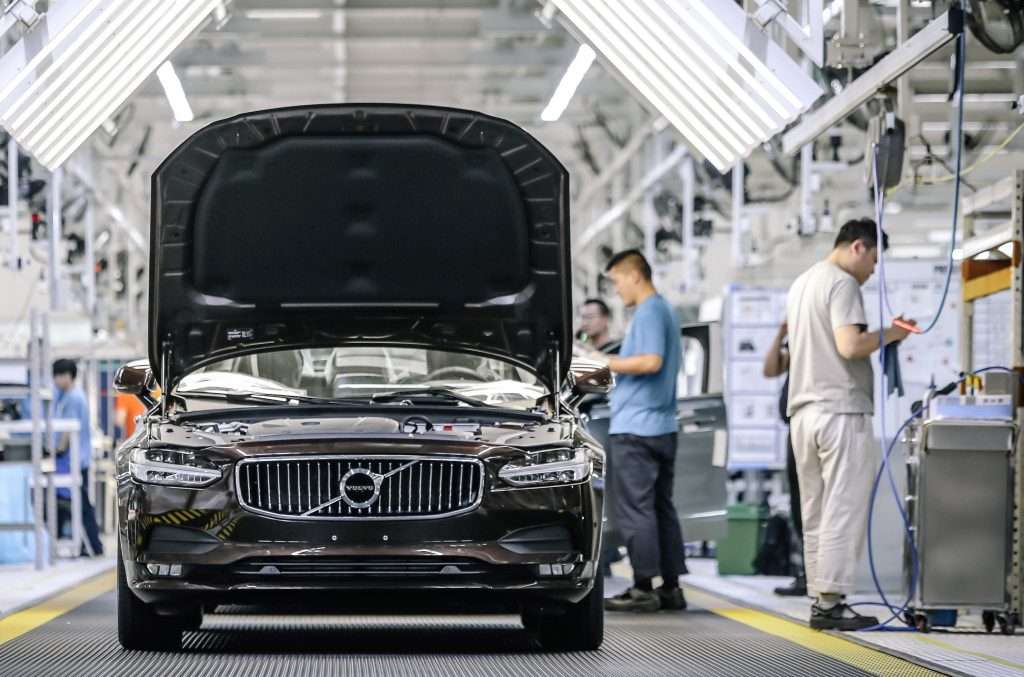
Image: Volvo Cars
Using robots can boost productivity. What’s less well-known is that they can also help companies to improve their workplace environments, and to attract and retain talent, as Volvo Cars has discovered.
Manufacturers around the world are experiencing labour shortages, with younger generations being reluctant to seek careers in industry. In the face of this, the role of robots has never been more important.
Volvo Cars, for example, is taking a lead by using robots to improve its workplace environments, and to retain and attract talent. It already uses large, traditional industrial robots that can lift several tonnes at a time in its production processes. But the Swedish car-maker is also introducing smaller cobots (collaborative robots) that work in tandem with humans.
It has found three ways that this form of robotic automation can help create a better workplace – with benefits for both the company and its employees.
1 Allowing employees to engage in fulfilling work At its core, automation can take care of the dull, dirty, and dangerous jobs that no one wants (or should have to) do, freeing workers to do more stimulating tasks and develop into new roles. This is especially the case with cobots, because they are designed to be integrated into existing workflows and to work alongside humans.
“If you hate it, automate it,” declares Dan Lämkull, a Volvo technical expert in ergonomics and research leader, who works with the company’s manufacturing engineers. He says Volvo has seen a notable change among workers where cobots have been implemented.
“We have to implement operations where employees are taken away from their normal tasks and shifted towards other roles – often related to service or maintenance of the robot,” he explains. “We know what advanced tasks the cobots can do, and how precise and consistent they are at doing the same thing again and again and not complaining. The cobot quickly evolves from being a competitor to an indispensable tool. It takes the bad jobs away, allowing humans to assume operator roles.”
2 Reducing injuries and promoting an age-inclusive workforce The benefits of automation extend far beyond reducing manual work. It can also help to achieve a safer working environment that protects workers’ health long-term. Take manual palletising, for example, where workers typically need to bend, lift and twist for hours on end – possibly causing long-term musculoskeletal disorders including back, neck and upper limb injuries.
This is a central motivation for automation at Volvo, where cobots are being used for in-plant logistics and in pre-assembly stations. Here, human workers have traditionally sequenced parts – such as brake discs and callipers – needed on the main line, and put them into boxes, which are transported to the line. These parts are quite heavy, and the job takes a toll on the body. However, even if the parts are not heavy, the high repetition and awkward body postures can still cause musculoskeletal disorders and personal suffering.
“These kinds of tasks are demanding ergonomically,” Lämkull explains. “Parts can get tangled, and some are not very easy to grasp. They weigh from around 500g up to 2kg, but during a whole week, it easily becomes more than 20,000kg per worker. And that’s not sustainable.”
But automating these tasks pays off. “I don’t have hard data, but I know that within the areas where we have automated, sick leave and injury levels have definitely decreased,” Lämkull reports. “There is a clear correlation between higher automation and less sick leave due to musculoskeletal disorders. The injuries disappear because we have automated.”
He emphasises that safety in the automotive industry isn’t just about the drivers and passengers. “We have a safety culture in the company. Everything we are doing is basically about safety.”
Minimising or removing strenuous activities that can lead to serious health consequences is also key in retaining workers who have often had the same job for many years. Adjusting the work environment to address age-related physical requirements can help manufacturers to create a more supportive atmosphere and amplify the input of senior workers.
3 Making manufacturing a more attractive career One of the main challenges for manufacturers around the world is the difficulty in attracting labour – especially skilled labour. This is partially due to demographic changes, but also down to younger generations having a negative perception of manufacturing. This often stems from misconceptions that the jobs are unsafe, unfulfilling, and lacking in opportunities for professional development and career advancement.
In the past, many companies outsourced production, especially to Asia. But with wages having increased dramatically in many Asian countries, and with the supply chain challenges of recent years caused by Covid and geopolitical uncertainty, this strategy seems outdated.
To attract younger talent, businesses must remember that each generation will have different expectations of work. For younger employees, job choices are often influenced by how clear a career path is. Cobot automation can offer them a dynamic business environment, where technology and automation make jobs more modern, exciting, and intellectually stimulating.
Dan Lämkull believes that Volvo’s increasing use of automation has allowed it to attract and retain stronger talent.
“We have a philosophy that we want to be the most wanted employer, and to attract the most talented people,” he says. “This means we have to offer interesting tasks – and picking things from a box all day is not very interesting or sustainable.
“However, being a robot or surveillance operator, or programming, maintaining, and installing robots, is much more attractive and interesting,” Lämkull adds. “That’s more of an engineering job. Then we can attract the most talented people. And we also become a more wanted employer. This new technology is a facilitator for attracting younger and talented people and retaining them in the company.”
